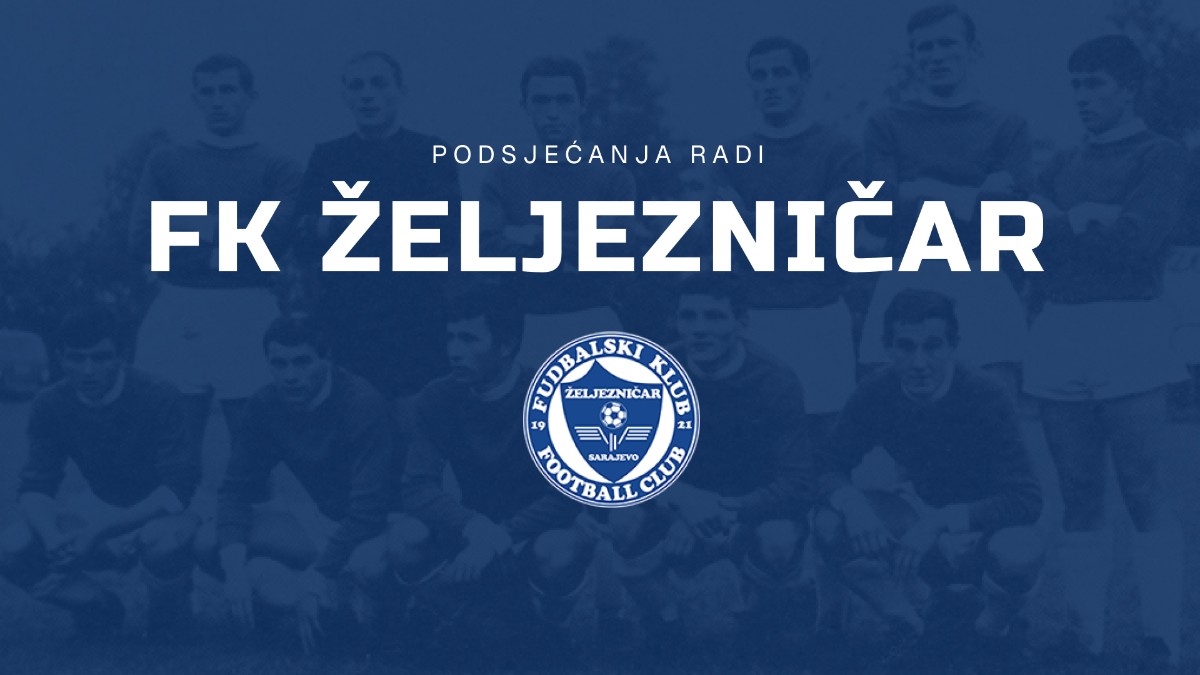
Unlike the city’s clubs at the time, which were mostly associated with different national communities, Željezničar was born from the desire of young railway workshop workers and their friends to have their own club and an opportunity to compete.
The idea of founding the club emerged as early as 1920. Young railway workers wanted to organize a team that would bring together people connected with the railway, as well as everyone who shared their love of football.
The name suggested itself – Željezničar.
The road to official competition was not easy. The club faced financial problems, a lack of playing fields and administrative obstacles. Nevertheless, the founders’ enthusiasm was stronger than any difficulty.
After playing the required matches, Željezničar was admitted to the Sarajevo Sub-Association on September 19, 1921, and thus began its official competitive journey. Today, that date is celebrated as Club Day.
From modest beginnings and its first matches on makeshift pitches, Željezničar grew into one of the most recognizable sporting symbols of Sarajevo and Bosnia and Herzegovina.
GRBAVICA – A HOME TO LOVE, EVEN IN THE TOUGHEST TIMESOne of the most important parts of Željezničar’s identity is Grbavica Stadium, also known by the nickname “Valley of the Jugs.”
Construction of the stadium began in 1949, thanks to a major volunteer effort by club members and supporters.
Grbavica was officially opened on September 13, 1953, and Željezničar played its first official match at the new stadium against Šibenik, winning 4–1.
Over the decades, Grbavica has become much more than a place where football matches are played. It is a symbol of belonging, togetherness and love for the color blue.
A particularly difficult chapter in the stadium’s history took place during the war in Bosnia and Herzegovina. Grbavica found itself on the front line of the conflict and suffered extensive damage.
On May 4, 1992, the wooden west stand was set on fire, and part of the stadium was mined. The fire also destroyed 316 trophies belonging to the Željezničar Sports Society, 42 of which belonged to the footballers. It was one of the most painful moments in the club’s history, as its home was almost completely destroyed.
After the war ended and the Grbavica neighborhood was reintegrated on March 19, 1996, reconstruction of the stadium began. On May 2 of that year, the first postwar match was played: the city derby between Željezničar and Sarajevo, which ended in a 1–1 draw.
Although the stadium had not yet been rebuilt, the return to Grbavica meant much more than the result on the pitch – it marked the club’s return to its home and the beginning of a new chapter in its history.
GREATEST SPORTING ACHIEVEMENTSThroughout its rich history, Željezničar has won trophies and achieved results that have left their mark on football in this part of the world.
The club’s greatest domestic achievement in the former Yugoslavia came in the 1971/72 season, when the team from Grbavica won the Yugoslav championship. It was a historic moment for the club, its fans and the city of Sarajevo itself.
Željezničar also achieved notable results on the European stage. In the 1971/72 season, it reached the quarter-finals of the UEFA Cup, while its greatest international success came in the 1984/85 season, when it reached the semi-finals of the same competition.
On its way to the semi-finals, Željezničar eliminated Sliven from Bulgaria, Sion from Switzerland, Universitatea Craiova from Romania and Dinamo Minsk from the then-Soviet Union.
The final obstacle on the way to the final was Hungary’s Videoton. After losing the first match 3–1, Željezničar had a great opportunity to make up the deficit at Grbavica.
The Blues took the lead and were within reach of a historic final for a long time, but a late goal by the visitors ended their European dream.
After Bosnia and Herzegovina became independent, Željezničar continued to win trophies.
The club has won six Bosnian Premier League titles, six Bosnia and Herzegovina Cup trophies and three Bosnia and Herzegovina Super Cups.
LEGENDS WHO LEFT THEIR MARK ON GRBAVICAWhen talking about Željezničar, it is impossible not to mention the people whose footballing skill, character and achievements made them part of the club’s history.
Ivica Osim is one of the greatest names in the history of Željezničar and European football alike.
As a player, he was an important part of the generation that developed into a respected Yugoslav club, and as a coach, he achieved historic success by reaching the semi-finals of the UEFA Cup in 1984/85.
His knowledge, football philosophy and authority left a deep mark in Sarajevo and far beyond the borders of Bosnia and Herzegovina.
Josip Katalinski – Škija was one of the best-known footballers of his generation. His performances for Željezničar and the Yugoslavia national team earned him the status of a great sporting figure. He is remembered as a strong, combative and exceptionally talented defender.
Josip Bukal was one of the most important forwards in the club’s history. His goals and footballing ability defined one of Željezničar’s most successful eras, and his name remains forever linked with the generations that built the club’s identity.
Mehmed Baždarević was one of the symbols of the generation that represented Željezničar on the great European stage. His performances in midfield, football intelligence and international career made him one of the most recognizable players to emerge from Grbavica.
Edin Džeko is one of the best-known footballers to have come through Željezničar. He attended the club’s youth academy and made his first-team debut in 2003, before continuing his career at major European clubs.
He later became captain and the all-time leading scorer for the Bosnia and Herzegovina national team, remaining one of the greatest names in Bosnian football.
Other great names who have left their mark on the club’s history include
Mišo Smajlović, Enver Hadžiabdić, Edin Bahtić, Haris Škoro, Milomir Odović and many others.
A special place belongs to
Amar Osim, who continued the family’s footballing tradition as a coach. He led Željezničar to numerous domestic successes, and his coaching career defined one of the significant periods in the club’s history.
ŽELJO’S ACADEMY – A FACTORY OF FOOTBALLING TALENTOne of Željezničar’s greatest assets has always been its youth academy.
For decades, the club has been known for working with young footballers and developing players who have gone on to enjoy notable careers in domestic and international football.
Among the best-known names to have come through Željo’s academy are
Ivica Osim, Josip Katalinski, Mehmed Baždarević, Mario Stanić, Elvir Baljić, Rade Bogdanović, Ibrahim Šehić, Edin Višća, Amir Hadžiahmetović and Edin Džeko.
Edin Džeko, one of the most successful footballers from Bosnia and Herzegovina of all time, stands out in particular.
His journey from Željezničar’s youth teams to the biggest European clubs is an example of how much quality coaching, dedication and talent can contribute to the development of a young footballer.
Željezničar’s youth setup remains an important part of the club’s identity today. Its value lies not only in developing future first-team players, but also in helping young people grow through sport, discipline, teamwork and respect for the values of football.
THE MANIACS – THE BLUE FAMILY FROM GRBAVICAŽeljezničar has one of the most recognizable fan groups in Bosnia and Herzegovina. Its most passionate supporters are known as the Maniacs.
Their connection with the club goes far beyond supporting it during matches. Grbavica is a gathering place for generations of fans, families and friends who have inherited their love of Željezničar or developed it themselves over the years.
The fans’ support during the most difficult moments in the club’s history, as well as their participation in rebuilding the stadium, is especially memorable. The construction of the east stand in 2017, in which fans took part through a project offering ten-year season tickets, showed just how strong the bond between the club and its supporters is.
Željezničar is a club loved not only for its trophies and victories. Its special character lies in a sense of belonging, tradition and the feeling that Grbavica is home.
FK ŽELJEZNIČAR IN THE AFT SYSTEMFK Željezničar has been part of the AFT system since we began tracking results, and its achievements in previous seasons show the club’s consistent participation and engagement across different age groups.
·
2024/25 Season: In the first season we tracked, Željezničar earned a total of 185 AFT points.
·
2025/26 Season: In the second season, the club made significant progress, collecting a total of 474 AFT points.
2026/27 Season: In the current season, Željezničar has so far earned 165 AFT points across all age groups combined.
These results confirm the continued presence of one of Bosnia and Herzegovina’s best-known football clubs in the AFT system, which contributes further to the development of children’s football through competitions and work with younger age groups.
MORE THAN A HUNDRED YEARS OF ONE STORYFrom the young workers at the Railway Workshop who wanted to found their own club more than a century ago, through generations that won the Yugoslav title and played in European semi-finals, to today’s young footballers dreaming of one day playing at Grbavica – Željezničar has built a history that goes beyond sporting results.
Its story is one of perseverance, togetherness, love of football and the people who have stood by their club, whatever the circumstances.
Because Željezničar is not just the name of a football club from Sarajevo. It is a lasting tradition, a blue color that connects generations and a story that continues with every new match at Grbavica.
 AFT BiH
Podsećanja radi...