Siniša Mihajlović was born in Vukovar (Croatia, SFRY) on February 20, 1969, and died in Rome on December 16, 2022. In Yugoslav, Serbian and world football, he is remembered as one of the best free-kick takers of all time, and his left foot became a trademark of football in the 1990s and 2000s.
In Italy, he was nicknamed “Il Sergente” (The Sergeant) because of his strict discipline and strong character, and, after his battle with illness, “Il Guerriero” (The Warrior). To his friends, however, he was always “Miha”.
The boy from Borovo.
Although he was born in Vukovar, Siniša grew up in Borovo Naselje, where he also began playing football for NK Borovo. As a teenager, he broke into the first team and played many matches in senior football. Left-footed, combative and determined, he soon attracted the attention of bigger clubs.
The first big step: Vojvodina.
In 1988, he moved to Vojvodina in Novi Sad, with whom he won the Yugoslav league title in his very first season (1988/89)—one of only two titles the club has won in its history. He played 73 league matches for Vojvodina and scored 19 goals.
It was at Vojvodina that people first heard of him, and it was the first team with which he became a champion.
Red Star’s European and world champion.
In early 1991, he joined Red Star Belgrade and became part of the famous generation that won the European Cup that season (beating Marseille on penalties in Bari), followed by the Intercontinental Cup.
That entire generation is remembered throughout the region, and history recognizes them as one of only two teams from Eastern Europe to win the European title.
The other team was Steaua Bucharest, Romania—in 1986. (Even more interestingly, the name Steaua Bucharest means “Star of Bucharest”.)
Italy: 14 years, four clubs.
Red Star’s incredible success brought Miha to the attention of leading European clubs, and he chose Roma—primarily because of his “footballing father,” Vujadin Boškov, who had a major influence on his career.
In 1992, he moved to Rome to play for the “Giallorossi”, but did not manage to achieve any notable results with the team. Nevertheless, he is remembered for scoring the fastest debut goal in the club’s history (he scored it in the Coppa Italia against Taranto, just four minutes after coming onto the pitch).
He did not win a trophy with Roma, but he is also remembered for advising the coach at the time, Vujadin Boškov, to let a 17-year-old boy, Francesco Totti, make his Serie A debut. That boy went on to become the club’s greatest legend. Totti later publicly thanked him for it.
Sampdoria: the football giant awakens
Roma did not shine in Siniša’s second season either, so he moved on. Again on Vujadin Boškov’s recommendation, he joined Sampdoria in the summer of 1994, where he met two more important people in his football career. The first was Swedish coach Sven-Goran Eriksson, Sampdoria’s manager, who moved him from the left wing—where he was too slow for Italian football—to the centre of defence.
“Miha” would repay him by becoming one of the best centre-backs in Serie A history. In that position, he became known for his long, accurate passes, free kicks and corners.
One of the strikers he sent those passes to was Roberto Mancini, with whom he developed such a close relationship that he himself described it as a “footballing marriage”.
They knew each other for almost 30 years: they were teammates at Sampdoria and Lazio, and later Mancini became his coach and first major mentor in his coaching career, when Mihajlović was his assistant at Inter.
Lazio: The peak of his career
The next step in Siniša Mihajlović’s football career came at the invitation of Eriksson, who was building a new team at Lazio. He returned to Rome, but this time played for the “Sky Blues” (Roma’s biggest rivals).
He spent six seasons at Lazio and became one of the team’s leaders. With the club, he won:
· Scudetto (1999/2000)
· UEFA Cup Winners’ Cup (1999)
· UEFA Super Cup (1999)
· Italian Super Cup (1998 and 2000)
· Coppa Italia (2000 and 2004)
In addition to this trophy-winning record, a couple of other “interesting” facts connect him to Lazio: he scored Lazio’s first-ever Champions League goal (against Bayer Leverkusen on September 14, 1999) and the winning goal against Chelsea at Stamford Bridge (March 22, 2000), which took them through to the Champions League quarter-finals in that inaugural season. An even more striking “footnote” in his rich football career at Lazio was recorded on September 14, 1998. “Miha” scored no fewer than three goals directly from free kicks against his former club, Sampdoria, without the ball touching any other players. He scored them past his former teammate Fabrizio Ferron, and there is an anecdote that the two had been playfully challenging each other before the match, and that Siniša later said—true to his famous stubbornness—that “if there had been five free kicks, I would have scored all five”.
Inter: The end of his playing career.
He spent two seasons at Inter as a player (2004–2006) and two as an assistant coach (2006–2008). Mancini brought him to Milan in 2004, when his contract with Lazio expired.
He was 35 and already a veteran, but immediately showed a winning mentality. According to the club’s own records, he played 43 matches for Inter and scored six goals.
Trophies as a player:
· Coppa Italia (2004/05 and 2005/06). The first was Inter’s first cup in 23 years.
· Italian Super Cup (2005)
· Scudetto (2005/06), awarded to Inter retroactively because of the Calciopoli scandal. Mihajlović thus won his second Italian title, following the one with Lazio.
On April 8, 2006, he scored against Ascoli in an Inter victory and, at 37 years, one month and 19 days old, became the oldest goalscorer in the club’s history. Javier Zanetti later broke his record in the 2010/11 season. It was also the last goal of his career, and he retired from playing in 2006.
He played 63 matches for the Yugoslav national team and scored 10 goals, and appeared at the 1998 World Cup and Euro 2000.
Coaching career: A new role, new challenges
Assistant coach (2006–2008). Immediately after retiring as a player, he became Mancini’s assistant and played a key role in the two seasons in which Inter won two league titles (2006/07 and 2007/08) and the 2006 Italian Super Cup. This was the start of his coaching career, and in 2008 he took charge of Bologna.
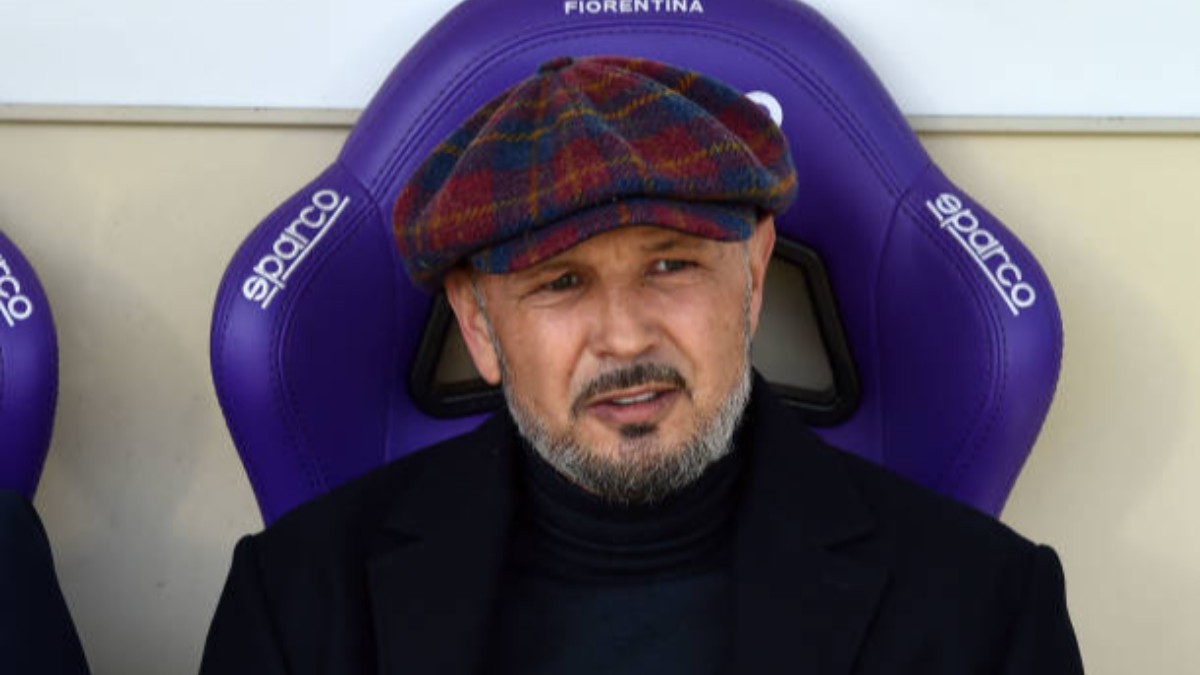
As a coach, he managed Bologna twice, Catania, Fiorentina, the Serbian national team, Sampdoria, Milan and Torino. His greatest successes came at Sampdoria (seventh place) and at Bologna, where he is also remembered as a fighter who stayed on the bench despite his illness. He did not replicate his playing achievements as a coach, but is remembered as someone who gave everything, demanded discipline and hard work, and never gave up.
The fight of his life.
In July 2019, he announced publicly that he had leukemia. He continued working and managing Bologna, saying that he would fight. He died in Rome on December 16, 2022, at the age of 53. Some of the best-known Italian, Serbian and European footballers and coaches attended his funeral. He was a proud family man.
He was born to a Serbian father and a Croatian mother, and married an Italian woman with whom he had five children. In short, he was a great European footballer who made champions of the clubs he played for.
Siniša Mihajlović’s talent was evident in his free kicks and corners, as well as his accurate passes. But that talent was not his only “weapon”. His character, dedication in training and fighting spirit brought him all his success in football.
The boy from Borovo made football history in two different countries and proved that hard work and perseverance pay off, no matter where you come from.
 Zanimljivosti
Da li ste znali za...