The club was
founded on October 24, 1946, through the merger of Sarajevo clubs Udarnik and Sloboda.
Initially, it was called
FD Torpedo, in honor of
Moscow’s Torpedo, and the name
FK Sarajevo was finally adopted on May 20, 1949.
They played their first match
on November 3, 1946, defeating Bratstvo from Travnik 6–0.
Although the club’s colors were initially sky blue and white, the maroon-and-white kit was introduced in 1962 and has been inseparable from the club’s identity ever since.
Greatest achievementsSarajevo was
the most successful Bosnian-Herzegovinian club in Yugoslavia:
·
Yugoslav champions in 1966/67, the first club from outside Serbia and Croatia to win the title
·
Yugoslav champions in 1984/85· Runners-up twice and Yugoslav Cup finalists twice
· In the European Cup, they
1967/68 were eliminated in the second round by eventual winners Manchester United
· Reached the UEFA Cup round of 16 in
1982/83, where they were stopped by Anderlecht
After
Bosnia and Herzegovina gained independence, Sarajevo won five league titles (the last two consecutively, in 2019 and 2020) and a
record eight Bosnia and Herzegovina Cups.
Their most recent trophy came in the
2024/25 season, ending a
five-year trophy drought.
Throughout its history, Sarajevo has also reached
the final qualifying rounds of the Champions League and Europa League, where they were stopped by Dynamo Kyiv, Celtic and others.
Stadium and supportersTheir home ground is
Asim Ferhatović Hase Stadium in Koševo, the largest in the country,
with a capacity of around 34,700.
It opened in
1947, and hosted the opening ceremony of the 1984 Winter Olympics.
The Butmir training center in Ilidža, opened in 2015, covers around 70,000 m².
The organized supporters’ group,
Horde zla (Hordes of Evil), was founded in 1987 and forms the heart of the North Stand.
Sarajevo supporters are called Pitari, and the club anthem is „We Are Giants“.
Matches against
Željezničar, the Eternal Derby, are among
the most famous derbies in the world.
By May 2026, 159 derbies had been played, with
48 wins for each club and
63 draws.
Legends (players and coaches)
·
Asim Ferhatović Hase – the club’s greatest legend, he played from 1952 to 1967, and the stadium still bears his name
·
Safet Sušić – named Bosnia and Herzegovina’s best player of the past 50 years in 2004 (UEFA Jubilee)
·
Predrag Pašić, Faruk Hadžibegić (captain of Yugoslavia at the 1990 World Cup),
Mirsad Fazlagić (captain of Yugoslavia at the 1968 European Championship),
Elvir Baljić·
Husref Musemić – a player in the 1985 championship-winning generation, and later the most successful coach in the club’s history
· coaches:
Miroslav Brozović, Boško Antić, Fuad Muzurović
The club todayThe president and majority owner is
Ismir Mirvić, and the main sponsor is
Turkish Airlines.
Sarajevo is considered
the most important exporter of talent in Bosnia and Herzegovina – the club accounts for seven of the ten biggest transfers in the history of Bosnian-Herzegovinian football.
Zoran Zekić has been in charge since June 2026, and the club finished last season in third place.
Youth academy and AFT rankingSarajevo’s youth setup comprises
the “Asim Ferhatović Hase” Football School and the FK Sarajevo Academy, and the history of its youth development dates back
to the 1950s.
The school is known for
recruiting the most talented boys from across Bosnia and Herzegovina.AFT points earned by the youth teams:
·
2024/25 season: total points earned across all age groups – 350
·
2025/26 season: total points earned across all age groups – 165 points
·
2026/27 season: total points earned across all age groups (so far this season) – 230
 AFT BiH
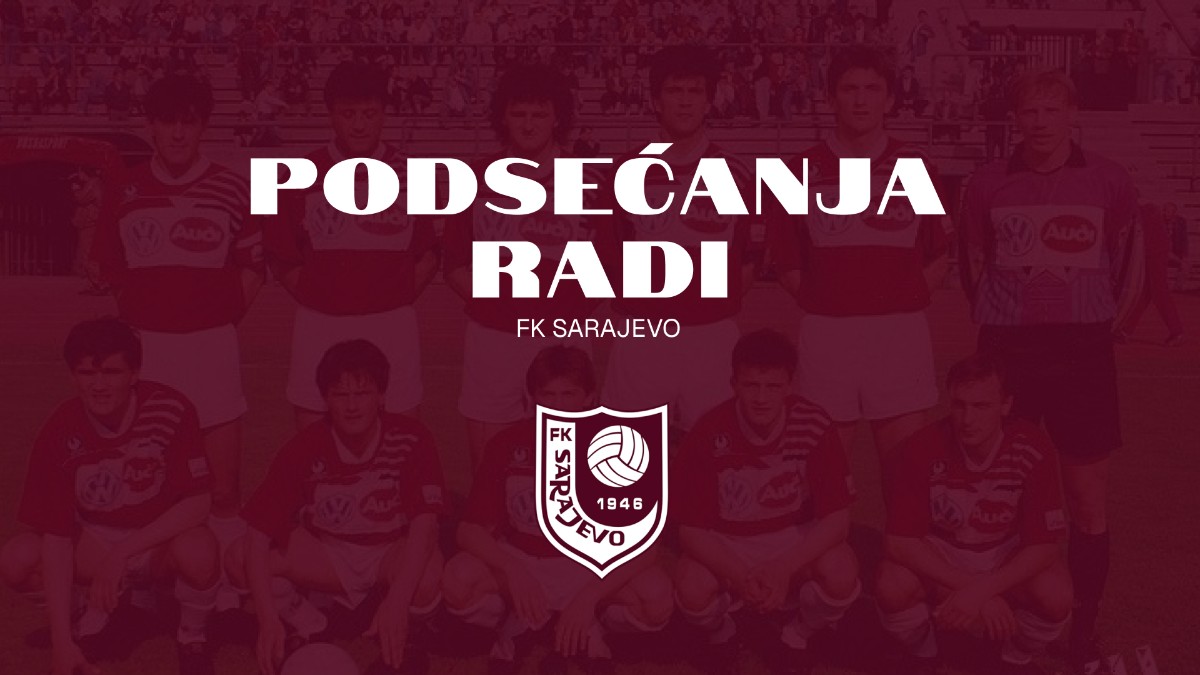
Podsećanja radi...
AFT BiH
Podsećanja radi...