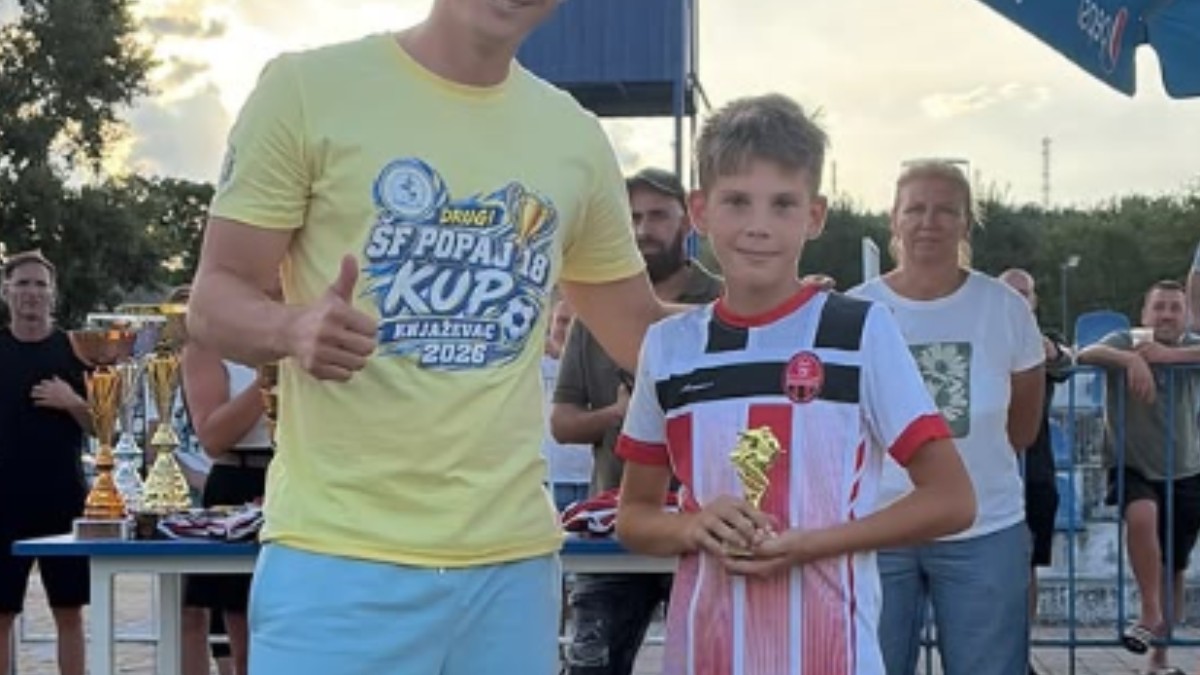
Since the family lived in
the Svrakino Selo neighborhood, when the war finally ended, Edin's father took him to his first organized training sessions at the only
available club in the neighborhood – Željezničar.
In that club, Džeko learned his first football steps, and his peers, due to his height and thinness – jokingly – compared him to
a stick or a pole.
Who First Recognized Džeko's Talent?Jusuf Šehović was the first coach to notice Edin Džeko –
this happened in 1998, when Edin was
only 12 years old. It was a period immediately after the war, when the Grbavica stadium was largely destroyed, making the conditions for playing quite difficult.
Šehović led Džeko
through the youngest selections of Željezničar. According to the memories of people from the club,
he remembered him as a boy who was "interested solely in advancing towards the goal" – thus, even then, that offensive, goal-scoring trait of character was evident.
It is important to note that
Šehović was not the one who introduced Džeko to the first team – that was, according to the same sources,
done by Amar Osim, the then coach of Željezničar who later won five national titles with the club.
Osim
gave him his debut in the first team at the age of 17 and recognized his potential even though
Džeko was playing in midfield at that time, not as a forward. Osim said about Džeko that he was
"obsessed" with the idea of becoming a real striker.
First Professional Steps and Breakthrough in EuropeDžeko
played 35 league matches for Željezničar, and in 2005 (at the age of 19) he was sold to the Czech Republic, to FK Teplice, for a fee of 50,000 euros. After arriving in Teplice, he did not immediately establish himself, so he was
sent on loan to FK Ústí nad Labem – a club that played in the
second Czech league. The loan lasted about
six months (2005/06), and Džeko played 15 matches there and scored 6 goals, showing the first hints of his future career.
After a successful loan,
he returned to Teplice, where he stayed until 2007.
In his last season there (2006/07), he became the top scorer of the Czech first league with 13 goals and was named the best foreign player of the season in that competition – which opened the door for a transfer to Wolfsburg for 4 million euros.
The real "explosion" came in 2007, with the transfer to German Wolfsburg. There, in the
2008/09 season, together with Brazilian Grafite, he led the club to its historic first title of German champion in the club's history, and in the following season (2009/10) he became the top scorer of the Bundesliga with 22 goals.
This performance earned him
a transfer to Manchester City in 2011, then for
a record amount for a Bosnian player (he was paid around 32 million euros, or 640 times more than his first transfer to Teplice), where he won the English championship title. Followed by Roma, Inter, and Fenerbahçe – clubs where Džeko became
a synonym for reliability, experience, and goals even in the later years of his career.
Greatest AchievementsAlong with titles with Wolfsburg and Manchester City, Edin
Džeko, at 37 years old, played in the Champions League final in 2023 with Inter in Istanbul – precisely against his former club, Manchester City, which won that match 1-0. Although without a trophy that evening,
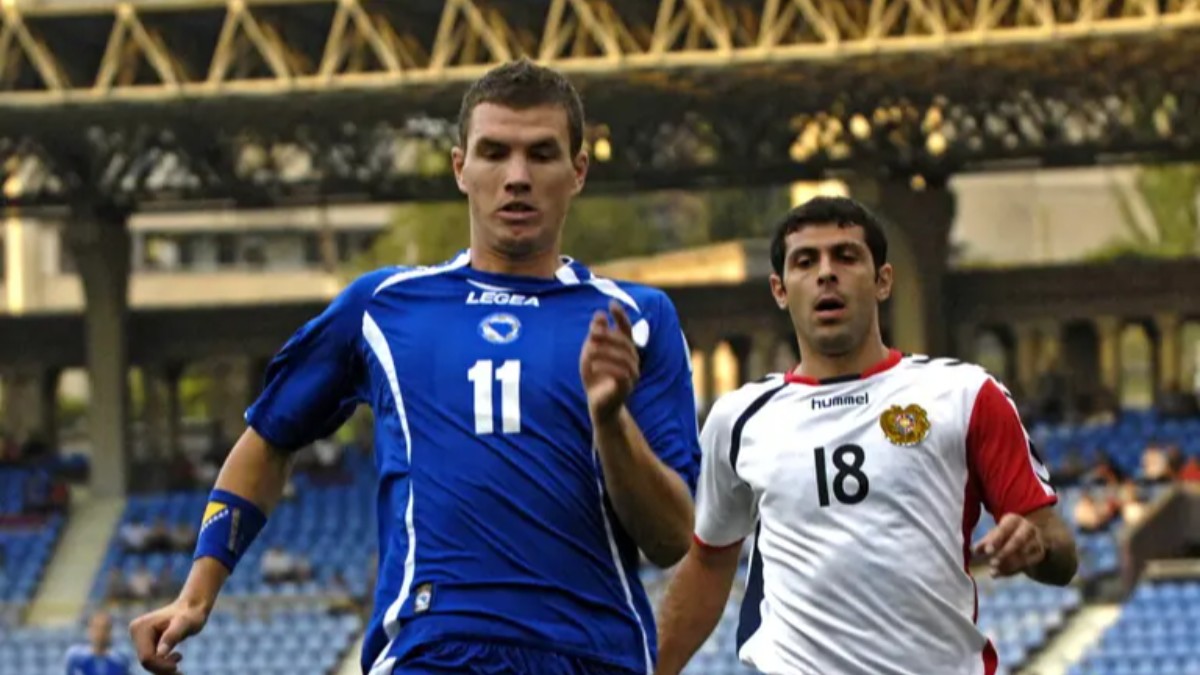
the mere qualification for the final at that age speaks volumes about his persistence and determination. In the Bosnia and Herzegovina national team, which he led for a long time as captain, he became absolutely the top scorer in history, with
over 60 goals.
Interesting Facts· Due to his style of play and elegance, he earned the nickname
"Sarajevo Swan" (Cigno di Sarajevo) in the Italian media, while fans at home affectionately call him
"Bosnian Diamond."· After reaching major European clubs and earning his first serious money,
Džeko returned to his hometown and bought a car for the taxi driver who, when he was a child, drove him to Željezničar's training for free – fulfilling a promise he made as a completely unknown young man with nothing.· Although he played in midfield in the younger categories, he later positioned himself as
a center forward and scored over 300 goals during his club football career.· He was named Bosnia and Herzegovina Footballer of the Year
three times in a row.
The story of Edin Džeko is the best reminder that the greatest successes in football often start from fields without grass, but that every child, through their effort and dedication (with someone who, at the right moment, recognizes their potential), can develop from "ordinary talent" to football heights.
 AFT BiH
Zanimljivosti
AFT BiH
Zanimljivosti